
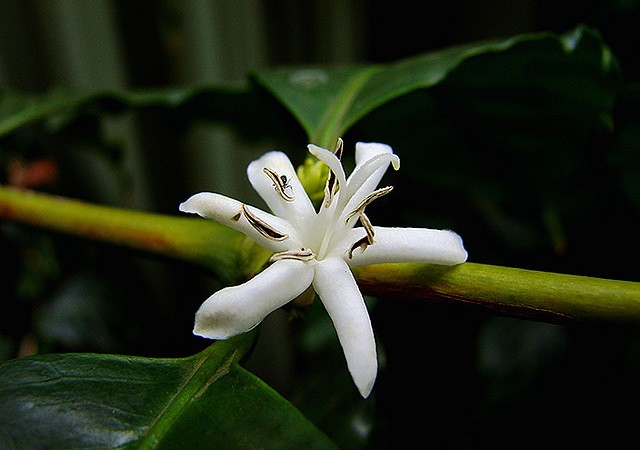
You’ve undoubtedly heard the words “Arabica” and “coffee” used interchangeably. It may be found in a variety of places, including grocery store coffee bags and your local café. You’re probably wondering what this name represents. That is just what we shall learn in this essay.
Arabica coffee is simply coffee that has been brewed with a specific kind of coffee bean known as “Arabica.” These beans get their name from the plant that produces them, coffea Arabica. This plant is just one of tens of thousands of coffea genes that make up the plants we call “the coffee plant.” As a result, these plants have various species, much as roses and orange trees have numerous species.
Arabica is the world’s most extensively farmed coffee type, accounting for around 60% of worldwide coffee production. That’s a lot, and the reason is simple: Arabica beans are the most flavorful and sweet of them all, the ones that consistently create the world’s most recognized coffee, the ones most lauded by pros and coffee enthusiasts alike.
The name is a little deceptive. The Arabica coffee plant, in reality, developed spontaneously in Ethiopia. In the 15th century, Arab traders discovered the advantages of coffee and brought the beans to Yemen, which is located on the other side of the Red Sea from Ethiopia.
They then began roasting and brewing it, disseminating it throughout the Arab area and eventually to Europe. The term “Arabica” thus refers to where the coffee was purchased by Europeans rather than where it was grown.
Coffee Types
Before man produced new species, there were many variations of coffee plants in nature. As previously said, Arabica coffee is only one of them, albeit the most popular. It accounts for a sizable amount of coffee output, and the last cup of coffee you had was almost certainly made with Arabica beans.
Other coffee varietals make for the remaining 40% of world output. After Arabica coffee, Robusta coffee is the most popular. It was previously known as coffea Canephora and was exclusively found in western and central Sub-Saharan Africa.
It is presently grown in countries ranging from Brazil to Kenya to Vietnam. These two coffee varietals, along with Arabica coffee, account for around 98 percent of all coffee beans sold globally.
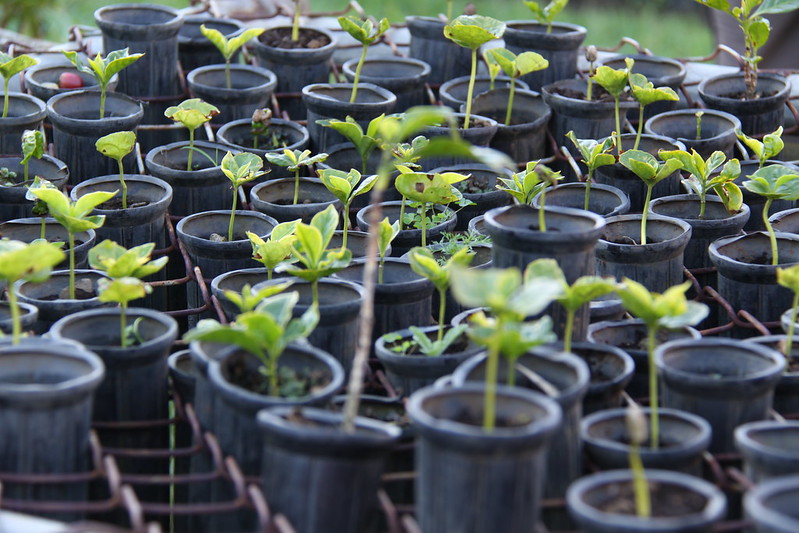
The remaining 2% is made up primarily of two other species: coffea Stenophylla and coffea Liberica. Stenophylla is found predominantly on the West African coast, in more humid and wet areas, whereas Liberica originated in West Africa but is now grown all over the world.
Indonesia and the Philippines are the principal producers of Liberica coffee. Both of these species, however, are insignificant in contrast to Robusta and Arabica coffee.
Arabica vs Robusta
Why was there such a focus on Robusta and Arabica in the coffee world? Given the variety of coffee species, the question begs to be posed.
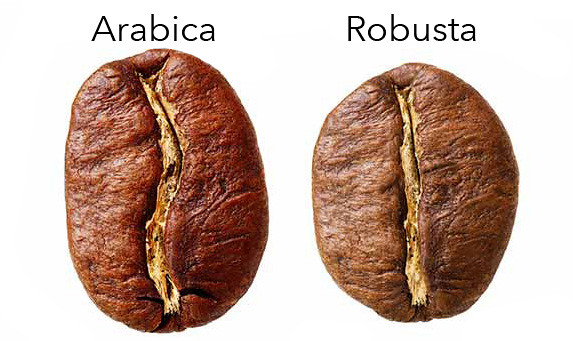
The main reason for this is because both taste better than the vast majority of other coffee species. Both are capable of making good coffee, with Arabica coffee gaining the most praise. Arabica coffee is sweeter and contains more acidity, as well as a wider range of flavors in the cup.
A coffee made from Arabica beans contains a variety of delicate flavors. When opposed to Robusta, Arabica does not have a strong body and has a lower caffeine content (about half). As a result, it is sweet and not overbearing, making it suitable for the majority of drinkers.
Robusta has certain benefits as well. It is less difficult to farm since it is more disease resistant and adaptable to a variety of climates. Arabica coffee’s growth zone is rather limited, but Robusta coffee is more tolerant of drier and hotter temperatures.
Furthermore, Robusta has stronger body, which is widely desired by espresso connoisseurs, and it contains more caffeine. Robusta coffee may be flavorless, but it is a great coffee to consume when you want a strong, heavy cup of coffee.
Where does it grow?
The Arabica coffee plant despises cold and dry weather. It needs high humidity and warm temperatures to flourish. Cold nights might be disastrous for the plant.
It’s no wonder, therefore, that Arabica coffee is grown in subtropical locations all over the world, particularly on hills and mountain slopes where the temperature is never too high but also not too cold that the plant suffers from icing.
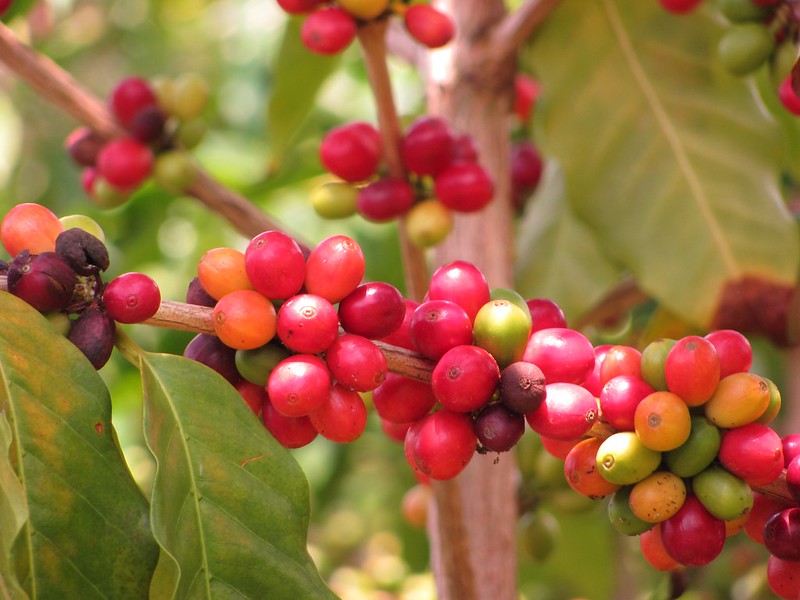
Consider elevations of 1900 feet or higher above sea level. Arabica coffee is cultivated almost anywhere there is a hot climate and some highlands. Colombia, Brazil, Central America as a whole, Peru, Kenya, Tanzania, Ethiopia, India, Indonesia, and a slew of tiny tropical islands provide a perfect environment for the coffea Arabica species to grow.
The aforementioned nations produce the vast majority of Arabica coffee, which all have subtropical climates and a big amount of cultivable areas that are not on plains.
When those two parameters are satisfied, there is a strong likelihood that outstanding Arabica coffee will be produced.
Popularity
Arabica coffee has become synonymous with “good coffee,” which is only partially true. Not all Arabica beans are excellent, and hence not every Arabica coffee made with them. A perfect cup of coffee is based on a number of factors, and merely selecting Arabica beans will not guarantee that you will have a superb cup of coffee.
Even if you use the best Arabica coffee beans available, if you brew it incorrectly, you will have a bad cup of coffee.
Arabica beans have more sugars, superior acidity, deeper flavors, and a lower caffeine content than other coffee beans, making them the best coffee beans you can buy (with ease). Because of these properties, Arabica coffee has become extremely popular.
At coffee auctions across the world, Arabica beans consistently get the highest points: on a scale of 0 to 100, it is not uncommon to see Arabica coffee scored over 80 or 90. Robusta beans are rarely given such high marks.
Of course, Arabica coffee is more costly since it is so much valued and adored. Arabica coffee mixes are more expensive than Robusta coffee blends, similar to how good wines might cost hundreds of dollars more than table wines. Quality, of course, has a cost.
Health benefits
Arabica coffee is not only tasty, but it also has various health benefits worth mentioning:
- It’s loaded in antioxidants.
- Caffeine concentration is high, but not as high as in Robusta, making it perfect for individuals who want to keep awake but are concerned about sleeping at night.
- It contains extremely little calories.
- Minerals such as niacin, magnesium, riboflavin, manganese, and potassium are abundant.
- Coffee grinds may be used to produce a great skin scrub (ok, this is true for any type of beans).
- When consumed in moderation, •Arabica coffee has been shown to be good to the heart and capable of avoiding cardiovascular disease.
 Small Coffee Place