

Until recently, we didn’t think of coffee as a carbonated beverage. It’s brewed, so there are no bubbles or anything. It’s a beautiful, yet still subtle, drink, akin to tea or chamomile.
Until lately, that is. You’ve probably seen the ready-to-drink cans at your local store. Some are just pre-made coffee, with or without milk, in a can that can be opened and enjoyed anywhere. Others have added gas to coffee, transforming it into a champagne-like beverage.
Another alternative is nitro coffee. You’ve most likely seen it in your favorite café, and if you haven’t, you will soon. Or, at the very least, heard about it. Nitro coffee, a carbonated beverage made by blending nitrogen gas with coffee, is the current coffee craze.
What is nitro coffee?
Coffee and wine are not the same thing. Because it is neither aged or fermented in barrels, it does not develop its own bubbles. Those will have to come later. Nitro coffee, on the other hand, is created by pumping nitrogen gas into pre-brewed coffee in order to make it frothy. Nitrogen was chosen as the best gas for human consumption since it is odorless and tasteless.
It has no effect on the taste of the coffee, but it does change its texture, making it seem more like sparkling water than still water.
Nitrogen has long been used to enhance the quantity of bubbles in beer. Its introduction into coffee is much more recent, dating back to 2012. Nitrogen-based beverages should be referred to as “nitrogenated” rather than “carbonated.” It’s merely a matter of language because the end result for the consumer is practically same.
The only noticeable difference is that nitrogen produces tiny bubbles that do not dissolve easily in the liquid. As a result, the mouthfeel differs from that of, say, carbonated or tonic water.
Nitro coffee is sometimes created from hot brewed coffee that has been left to cool to room temperature, although it is most commonly made from cold brewed coffee that has been refrigerated for a few hours. Because hot brewed coffee differs greatly from cold brewed coffee, the distinction is solely a matter of taste.
It is, however, simpler and more frequent to add nitrogen to cold brewed coffee, resulting in what should be formally referred to as “nitro cold brew coffee.” That is most likely what you were served at Starbucks or elsewhere, as drinking nitro coffee cold is far more prevalent during the warmer months of the year.
How does it taste?
You’re undoubtedly wondering how nitro coffee tastes if you haven’t tried it yet. As previously stated, nitrogen has no influence on the taste of the beverage, just on its texture. As a result, the taste profile of the coffee used to manufacture nitro coffee determines its flavor.

Nitro coffee with cold brewed coffee, as it is most commonly created, has the features of a cold brew, such as little acidity, nearly no bitterness, sweetness (if present in the coffee beans), and a highly clear drink.
Aside from these essential qualities, the nitrogen gas has a very smooth texture due to the micro-bubbles. Nitro coffee has more body and is “thicker” in the mouth, comparable to how effervescent water feels compared to still water.
Like beer or champagne, nitro coffee is frequently sipped unsweetened. Pour in a few ice cubes at most. The natural creaminess of nitro coffee is more than enough for most coffee connoisseurs to appreciate it without any extra additions. Otherwise, nothing prevents you from adding milk or syrups, which offer nitro coffee flavors that aren’t present in regular coffee.
Texture
The texture of nitro coffee distinguishes it from other coffee drinks. You’ll know this texture if you’ve ever tasted a Guinness drink. The nitrogen bubbles form a frothy, milky covering that descends from the glass’s rim to the bottom, giving it a satiny thickness.
This flowing gradation, like Guinness beer, is nicknamed a “cascade” because the bubbles appear to travel in a slightly circular fashion, akin to a waterfall.
In appearance, nitro coffee resembles a tumbler of Guinness beer. Only nitro coffee is usually lighter in color, depending on the quality of roasting of the coffee beans used and whether or not milk is added.
Acidity Level
Nitro coffee, as is commonly done with cold brew, has an unusual advantage. Coffee drinkers who suffer from acid reflux or have problems digesting coffee in general will be relieved to find that nitro coffee has a lower acidity than most other coffee drinks, resulting in much higher digestibility.
The cause is not nitrogen, though some gas may assist digestion, but rather the brewing procedure used to generate nitro coffee. Cold brewed coffee extracts components from the beans that hot brewed coffee does not. This is related to the water’s temperature: hot water has more bitterness and acidity than cold water.
As a result, cold brew nitro coffee is milder and less acidic than hot brewed coffee. Bitterness is heavily influenced by the type of beans used, so if you use really darkly roasted beans, you may end up with a bitter cold brew, but acidity should be maintained to a minimum.
Nitro coffee is a smooth and easy-to-drink coffee drink that stands out in the world of hot-brewed coffee variants due to its low levels of bitterness and acidity.
Caffeine Amount
Things start to get difficult here. Is nitro cold brew coffee more or less caffeinated than regular, non-nitro coffee?
Cold-brewed coffee has less caffeine than hot-brewed coffee. This is because hot water removes caffeine more easily than cold water. It seems to reason that nitro cold brew coffee would be lower in caffeine. And it’s feasible that it’s correct in the vast majority of cases.
It is, however, conditional. First and foremost, there are the beans themselves. If a cold brew is made using caffeine-rich beans, the finished result may have as much caffeine as a regular hot cup of coffee, if not more.
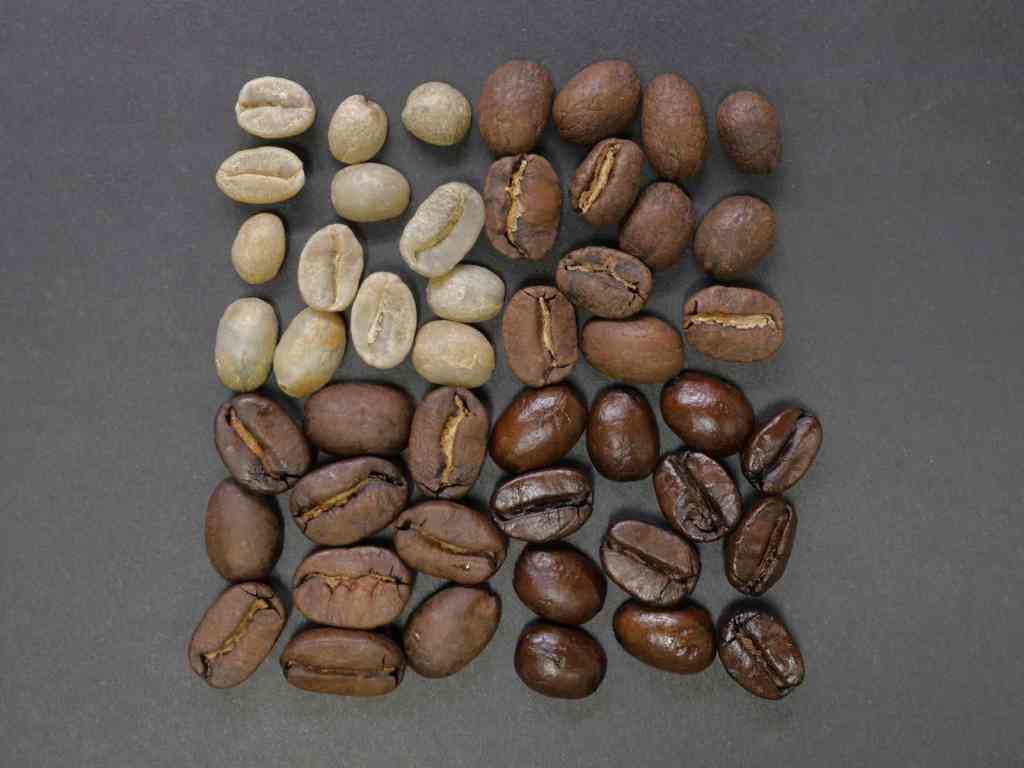
Due to the water-to-coffee ratio, a cold brew may have a higher caffeine amount than a hot brew while using the same beans. The amount of water required to produce coffee in a hot brew is frequently significantly greater than the number of coffee beans used. It becomes noticeably more prominent at greater sizes.
The ratio is not the same as the coffee-to-water ratio used in cold brew. It is unusual to use two or three times the amount of coffee as water in a cold brew.
Because there is so much coffee in a cold brew, there is more caffeine available for extraction than in a hot brew. As a result, a cold brew, and hence nitro coffee, can contain significantly more caffeine than a comparable sized cup of regular coffee.
As a result, yes, it does. Although this is not a hard and fast rule, hot brewed coffee contains more caffeine.
Health Benefits
Nitro coffee is similar to regular coffee in terms of giving a host of extra health benefits. You may anticipate the same outcomes as you would with any other type of coffee:
* Decreased depression
* Reduced diabetes risk
* Lower risk of death
* Protection against dementia, Alzheimer’s and Parkinson’s diseases
* Help in weight loss
Nitro coffee also has the advantage of allowing you to drink unsweetened coffee. Because of the influence of the nitrogen bubbles, nitro coffee has a somewhat sweeter flavor, and you may be able to drink it straight. Black coffee contains much less calories than coffee with milk or sugar, which is an enormous benefit for dieting and overall health.
In terms of health, you may assume that nitro coffee is the same as hot brewed coffee, and you may act accordingly.
Is it feasible to make it yourself?
Nitro coffee is typically based on cold brew, making it an expensive beverage. Cold brew requires more coffee per water than hot brew, as well as longer extraction times, which boosts the cost. Nitro coffee contains nitrogen, which raises the cost of serving you one.
As a consequence, it looks that making nitro coffee at home is a realistic alternative. But how difficult will it be?
By a little margin. The biggest obstacle is locating and using a whipped cream dispenser that has been charged with a nitrogen capsule. Many are for sale, and some companies have begun to develop nitro coffee makers, which are meant to use just nitrogen. Neither is very expensive, but if you drink a lot of nitro coffee, the nitrogen costs may quickly add up.

Once you’ve found out how to infuse nitrogen into your coffee, all that’s left to do is make a good cold brew, not concentrate, and pour it into a large glass. Sweeten and/or add milk to taste before using the nitrogen capsule to make your nitro coffee.
Conclusion
Cold brewed nitro coffee is more than just a trend; it’s a delicious coffee drink with a particular texture unlike any other coffee you can create. It’s less acidic, a little sweeter, and a little less abrasive than hot brewed coffee. The bubbles provide a new depth to it, making it more akin to champagne or beer than frothed milk.
However, it is still coffee, and any coffee expert should like it. The texture of nitro coffee is great for enjoying your favorite black beverage on a hot summer day!
 Small Coffee Place