Caffeine Battle: Red Bull vs. Coffee!

When you think of caffeine, you think of coffee. While caffeine is not exclusive to dark beverages (chocolate includes some), coffee is favored worldwide for both its flavor and caffeine content.

Since its early brewing times hundreds of years ago, coffee has been associated with caffeine as a boost to one’s attention and productivity. Millions of people rely on the energy that a cup of coffee may bring to get through their daily routines.

Caffeine and its good effects on the brain, however, are not restricted to coffee. As previously noted, both chocolate and tea contain it. Energy drinks have recently been a popular way to ingest caffeine with a flavor that is not necessarily the same as, or even similar to, coffee.

These energy drinks differ from cola and lemonade in that they contain extra brain and body-beneficial substances. It is unusual to find them fortified with vitamins or minerals. Caffeine is also contained, thus the moniker “energy drink.”

Red Bull is a well-known and extensively used energy drink. It’s marketed as a coffee alternative for people who want a caffeine boost but don’t want to sit down to drink a cup of coffee (or don’t like the flavor). What is the difference between a can of Red Bull and a cup of coffee? Which one contains the most caffeine? Let’s see how they stack up in terms of nutrition and flavor.

Red Bull

You’ve most likely heard the slogan “Red Bull gives you wings.” The Red Bull marketing team came up with a tagline that has now become part of our language.

The allure of Red Bull is clear. With over 6 billion cans sold each year, Red Bull has the biggest market share of any energy drink in the world. The drink was invented in 1987, more than 30 years ago, and is of Austrian origin, sold by Red Bull GmbH, which is based in a small town near Salzburg.

Red Bull’s appeal stemmed from its convenience and caffeine content: at the time it was created, there was no product on the market that could supply you with a rush of energy simply by purchasing it in a supermarket and bringing it with you on the road.

The closest equivalent was coffee, but you had to travel to a coffee shop and wait for the baristas to prepare it right there. Not as quick and easy as a Red Bull.

Coffee

Red Bull’s most immediate “competitor” is coffee. Coffee has been known for millennia across the world and is profoundly ingrained in many cultures and practices that have been passed down through generations. It consumes far more than Red Bull and shows no signs of declining market share to energy drinks. Coffee accounts for 75% of caffeine consumption in the United States alone.

There are two fundamental differences between a cup of coffee and a can of Red Bull: taste and convenience. Coffee obviously does not taste like Red Bull. It’s a freshly made beverage with natural bitterness and acidity that a Red Bull lacks.

It has no sugar and is only delicious because the beans used in the brewing have some natural sweetness. The flavor of black coffee, on the other hand, is disliked or enjoyed by the majority of people, and hundreds of coffee beverages have been developed to modify or improve the taste of coffee.

Another key issue to consider is convenience. Coffee must be prepared before it can be drank. Even instant coffee needs the addition of hot water and some mixing before it can be drank. There was no ready-to-drink coffee accessible in stores until recently, akin to a Red Bull.

As a result, drinking coffee requires more time and skill. Some baristas can create amazing coffee, while others fall short of what a coffee aficionado would consider a good cup. The flavor varies greatly depending on where you get it and how it is prepared. Red Bull cans taste the same all across the world.

As a result, the two beverages have the same benefits but totally distinct tastes and methods of intake.

Caffeine Levels

Caffeine, as previously said, is one of the key reasons why people drink coffee. In terms of energy boost, Red Bull’s caffeine concentration is comparable to that of a cup of excellent coffee. But how do they compare in detail? Coffee or Red Bull is more caffeinated.

The solution is not that simple. Every can of Red Bull has the same amount of caffeine: 80mg. The caffeine content is the same regardless of where you get it.

This is not the case with coffee. The caffeine amount of a cup of coffee varies greatly depending on how it is prepared, the proportion of coffee grounds to water used, and the type of beans used. It can range from as low as 20mg per cup to as much as 200mg for the most powerful and biggest brews. An espresso, the base of many coffee beverages, generally contains 40 to 100mg of caffeine, making it comparable to a can of Red Bull.

Other brews are more variable, as the coffee-to-water ratio is determined by personal taste and specialist formulas. Most coffee has around the same amount of caffeine as a can of Red Bull, although there are several exceptions.

Additives

Unlike coffee, Red Bull has a slew of extra substances that enhance both the flavor and the health benefits. Without going into detail on each, we’ll concentrate on the two most important: taurine and sugar.

Taurine

Taurine is widely included in energy beverages, including Red Bull. It is a naturally occurring substance found in animal products, particularly fish. Coffee has no taurine. Its benefits aren’t as powerful as caffeine’s, but they’re still beneficial: taurine has been shown to reduce the occurrence of cardiac risk factors including atherosclerosis and coronary heart disease. Taurine also improves healthy skeletal muscle function. In layman’s words, it is essential for our muscles to execute their normal functions.

As a result, taurine is a welcome addition to the list of Red Bull ingredients. That is undeniably a benefit of energy drinks over normal coffee. And, if you’re worried that drinking too much taurine would hurt your health, rest assured: multiple studies have shown that ingesting up to a few thousand milligrams of taurine per day causes no risk to our bodies.

Sugar

In coffee, sweeteners such as milk, sugar, cream, or milk substitutes are typically added. If you do, your coffee will have sugar in it. Otherwise, black coffee is naturally sugar-free. People who are on a diet or have diabetes need not be anxious that drinking coffee would damage their health or goals.

Red Bull, for example, has sugar by default. It’s not a little quantity, however; each can has around 27 grams, which is equivalent to 6 teaspoons of sugar. That is more than the daily limit. So, if you’re trying to lose weight or have diabetes, a can of Red Bull could be something you should avoid or take in moderation.

Health Benefits

Both coffee and Red Bull have health benefits. We’ve already discussed what taurine can do for your health. Antioxidants are present in Red Bull, just as they are in coffee. Coffee, on the other hand, offers a plethora of health advantages, with research indicating that it can help reduce the risk of a variety of conditions such as diabetes, Alzheimer’s, heart disease, and others.

Studies demonstrating how a mild to moderate consumption of Red Bull is beneficial to your health, on the other hand, are uncommon, if at all. Proceed with caution and limit your intake to a fair level as a precaution.

Coffee and Red Bull both include a lot of minerals, primarily calcium, magnesium, and sodium in Red Bull and calcium, potassium, magnesium, and phosphorus in coffee. Depending on the amount drank, both coffee and Red Bull may be a good source of a variety of minerals, meeting a considerable percentage of the daily requirement.

What is the purpose of caffeine?

Caffeine has long been investigated as a drug. It has been known for millennia that it may boost concentration and attention. Caffeine, in particular, is a brain system stimulant that increases response speed, concentration, motor coordination, and makes the body feel less exhausted. Those who work long shifts or accomplish difficult physical tasks swear by coffee.

As previously noted, the caffeine concentration of Red Bull is more than that of a cup of coffee on average. As a consequence, a can of this drink may allow you to quickly continue your profession or study with renewed vitality.

What is the upper limit?

Excessive consumption, like anything else, is not advised. Whether it’s coffee or Red Bull, consuming too much of either may be detrimental to your health, especially over time.

Caffeine is the first culprit. While the benefits outweigh the hazards, consuming more than 400mg of caffeine per day can be counterproductive, with more negative consequences than positive.

This equates to a couple of large cups of coffee each day and up to three or four Red Bulls. This is the upper limit, and people who have hypertension or heart problems should see their doctor before ingesting such significant amounts of caffeine on a regular basis. The majority of people should be able to live on half that amount.

Sugar isn’t a problem if you drink your coffee black. Large cups of frappe, latte, and other similar beverages can contain the same amount of sugar as a can of Red Bull. It is quite simple to surpass the recommended dietary sugar consumption while drinking an energy drink like Red Bull. Here, moderation is also encouraged.


What Is Nitro Coffee and How Is It Made?

Until recently, we didn’t think of coffee as a carbonated beverage. It’s brewed, so there are no bubbles or anything. It’s a beautiful, yet still subtle, drink, akin to tea or chamomile.

Until lately, that is. You’ve probably seen the ready-to-drink cans at your local store. Some are just pre-made coffee, with or without milk, in a can that can be opened and enjoyed anywhere. Others have added gas to coffee, transforming it into a champagne-like beverage.

Another alternative is nitro coffee. You’ve most likely seen it in your favorite café, and if you haven’t, you will soon. Or, at the very least, heard about it. Nitro coffee, a carbonated beverage made by blending nitrogen gas with coffee, is the current coffee craze.

What is nitro coffee?

Coffee and wine are not the same thing. Because it is neither aged or fermented in barrels, it does not develop its own bubbles. Those will have to come later. Nitro coffee, on the other hand, is created by pumping nitrogen gas into pre-brewed coffee in order to make it frothy. Nitrogen was chosen as the best gas for human consumption since it is odorless and tasteless.

It has no effect on the taste of the coffee, but it does change its texture, making it seem more like sparkling water than still water.

Nitrogen has long been used to enhance the quantity of bubbles in beer. Its introduction into coffee is much more recent, dating back to 2012. Nitrogen-based beverages should be referred to as “nitrogenated” rather than “carbonated.” It’s merely a matter of language because the end result for the consumer is practically same.

The only noticeable difference is that nitrogen produces tiny bubbles that do not dissolve easily in the liquid. As a result, the mouthfeel differs from that of, say, carbonated or tonic water.

Nitro coffee is sometimes created from hot brewed coffee that has been left to cool to room temperature, although it is most commonly made from cold brewed coffee that has been refrigerated for a few hours. Because hot brewed coffee differs greatly from cold brewed coffee, the distinction is solely a matter of taste.

It is, however, simpler and more frequent to add nitrogen to cold brewed coffee, resulting in what should be formally referred to as “nitro cold brew coffee.” That is most likely what you were served at Starbucks or elsewhere, as drinking nitro coffee cold is far more prevalent during the warmer months of the year.

How does it taste?

You’re undoubtedly wondering how nitro coffee tastes if you haven’t tried it yet. As previously stated, nitrogen has no influence on the taste of the beverage, just on its texture. As a result, the taste profile of the coffee used to manufacture nitro coffee determines its flavor.

Nitro coffee with cold brewed coffee, as it is most commonly created, has the features of a cold brew, such as little acidity, nearly no bitterness, sweetness (if present in the coffee beans), and a highly clear drink.

Aside from these essential qualities, the nitrogen gas has a very smooth texture due to the micro-bubbles. Nitro coffee has more body and is “thicker” in the mouth, comparable to how effervescent water feels compared to still water.

Like beer or champagne, nitro coffee is frequently sipped unsweetened. Pour in a few ice cubes at most. The natural creaminess of nitro coffee is more than enough for most coffee connoisseurs to appreciate it without any extra additions. Otherwise, nothing prevents you from adding milk or syrups, which offer nitro coffee flavors that aren’t present in regular coffee.

Texture

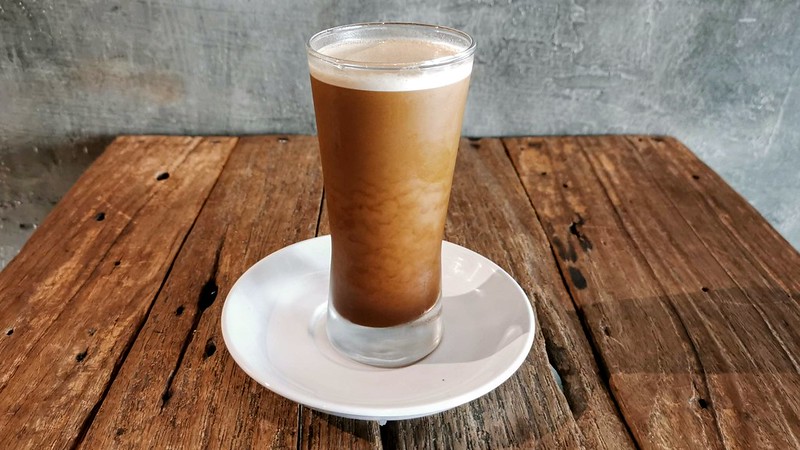
The texture of nitro coffee distinguishes it from other coffee drinks. You’ll know this texture if you’ve ever tasted a Guinness drink. The nitrogen bubbles form a frothy, milky covering that descends from the glass’s rim to the bottom, giving it a satiny thickness.

This flowing gradation, like Guinness beer, is nicknamed a “cascade” because the bubbles appear to travel in a slightly circular fashion, akin to a waterfall.

In appearance, nitro coffee resembles a tumbler of Guinness beer. Only nitro coffee is usually lighter in color, depending on the quality of roasting of the coffee beans used and whether or not milk is added.

Acidity Level

Nitro coffee, as is commonly done with cold brew, has an unusual advantage. Coffee drinkers who suffer from acid reflux or have problems digesting coffee in general will be relieved to find that nitro coffee has a lower acidity than most other coffee drinks, resulting in much higher digestibility.

The cause is not nitrogen, though some gas may assist digestion, but rather the brewing procedure used to generate nitro coffee. Cold brewed coffee extracts components from the beans that hot brewed coffee does not. This is related to the water’s temperature: hot water has more bitterness and acidity than cold water.

As a result, cold brew nitro coffee is milder and less acidic than hot brewed coffee. Bitterness is heavily influenced by the type of beans used, so if you use really darkly roasted beans, you may end up with a bitter cold brew, but acidity should be maintained to a minimum.

Nitro coffee is a smooth and easy-to-drink coffee drink that stands out in the world of hot-brewed coffee variants due to its low levels of bitterness and acidity.

Caffeine Amount

Things start to get difficult here. Is nitro cold brew coffee more or less caffeinated than regular, non-nitro coffee?

Cold-brewed coffee has less caffeine than hot-brewed coffee. This is because hot water removes caffeine more easily than cold water. It seems to reason that nitro cold brew coffee would be lower in caffeine. And it’s feasible that it’s correct in the vast majority of cases.

It is, however, conditional. First and foremost, there are the beans themselves. If a cold brew is made using caffeine-rich beans, the finished result may have as much caffeine as a regular hot cup of coffee, if not more.

Due to the water-to-coffee ratio, a cold brew may have a higher caffeine amount than a hot brew while using the same beans. The amount of water required to produce coffee in a hot brew is frequently significantly greater than the number of coffee beans used. It becomes noticeably more prominent at greater sizes.

The ratio is not the same as the coffee-to-water ratio used in cold brew. It is unusual to use two or three times the amount of coffee as water in a cold brew.

Because there is so much coffee in a cold brew, there is more caffeine available for extraction than in a hot brew. As a result, a cold brew, and hence nitro coffee, can contain significantly more caffeine than a comparable sized cup of regular coffee.

As a result, yes, it does. Although this is not a hard and fast rule, hot brewed coffee contains more caffeine.

Health Benefits

Nitro coffee is similar to regular coffee in terms of giving a host of extra health benefits. You may anticipate the same outcomes as you would with any other type of coffee:

* Decreased depression

* Reduced diabetes risk

* Lower risk of death

* Protection against dementia, Alzheimer’s and Parkinson’s diseases

* Help in weight loss

Nitro coffee also has the advantage of allowing you to drink unsweetened coffee. Because of the influence of the nitrogen bubbles, nitro coffee has a somewhat sweeter flavor, and you may be able to drink it straight. Black coffee contains much less calories than coffee with milk or sugar, which is an enormous benefit for dieting and overall health.

In terms of health, you may assume that nitro coffee is the same as hot brewed coffee, and you may act accordingly.

Is it feasible to make it yourself?

Nitro coffee is typically based on cold brew, making it an expensive beverage. Cold brew requires more coffee per water than hot brew, as well as longer extraction times, which boosts the cost. Nitro coffee contains nitrogen, which raises the cost of serving you one.

As a consequence, it looks that making nitro coffee at home is a realistic alternative. But how difficult will it be?

By a little margin. The biggest obstacle is locating and using a whipped cream dispenser that has been charged with a nitrogen capsule. Many are for sale, and some companies have begun to develop nitro coffee makers, which are meant to use just nitrogen. Neither is very expensive, but if you drink a lot of nitro coffee, the nitrogen costs may quickly add up.

Once you’ve found out how to infuse nitrogen into your coffee, all that’s left to do is make a good cold brew, not concentrate, and pour it into a large glass. Sweeten and/or add milk to taste before using the nitrogen capsule to make your nitro coffee.

Conclusion

Cold brewed nitro coffee is more than just a trend; it’s a delicious coffee drink with a particular texture unlike any other coffee you can create. It’s less acidic, a little sweeter, and a little less abrasive than hot brewed coffee. The bubbles provide a new depth to it, making it more akin to champagne or beer than frothed milk.

However, it is still coffee, and any coffee expert should like it. The texture of nitro coffee is great for enjoying your favorite black beverage on a hot summer day!

The Science And Art Of The Chemex

If the terms “stylish” and “full-control” tickle your attention, the Chemex may rapidly become your favorite coffee brewing tool.

It was created in 1941 and is still widely used today. The major reason is because it produces excellent coffee.

But also because of its appealing look and ease of use in making coffee while retaining total control over the process. Those who want to watch their coffee brew will adore the Chemex.

Design and Build

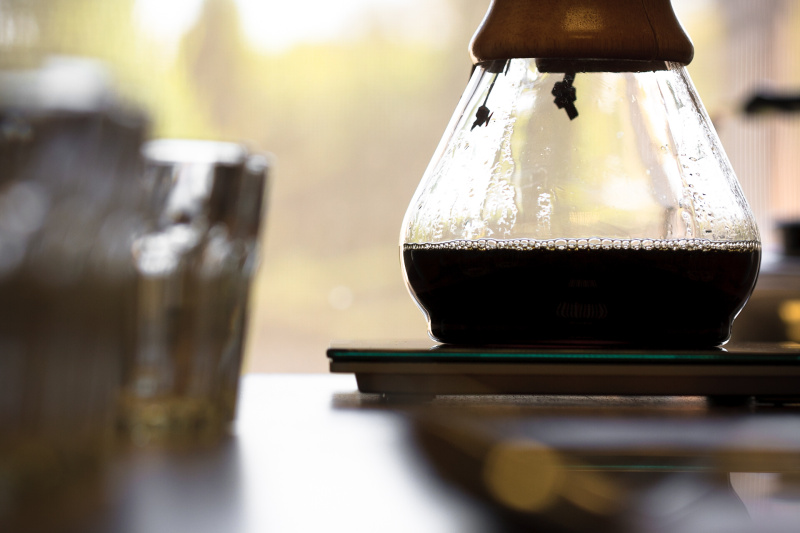
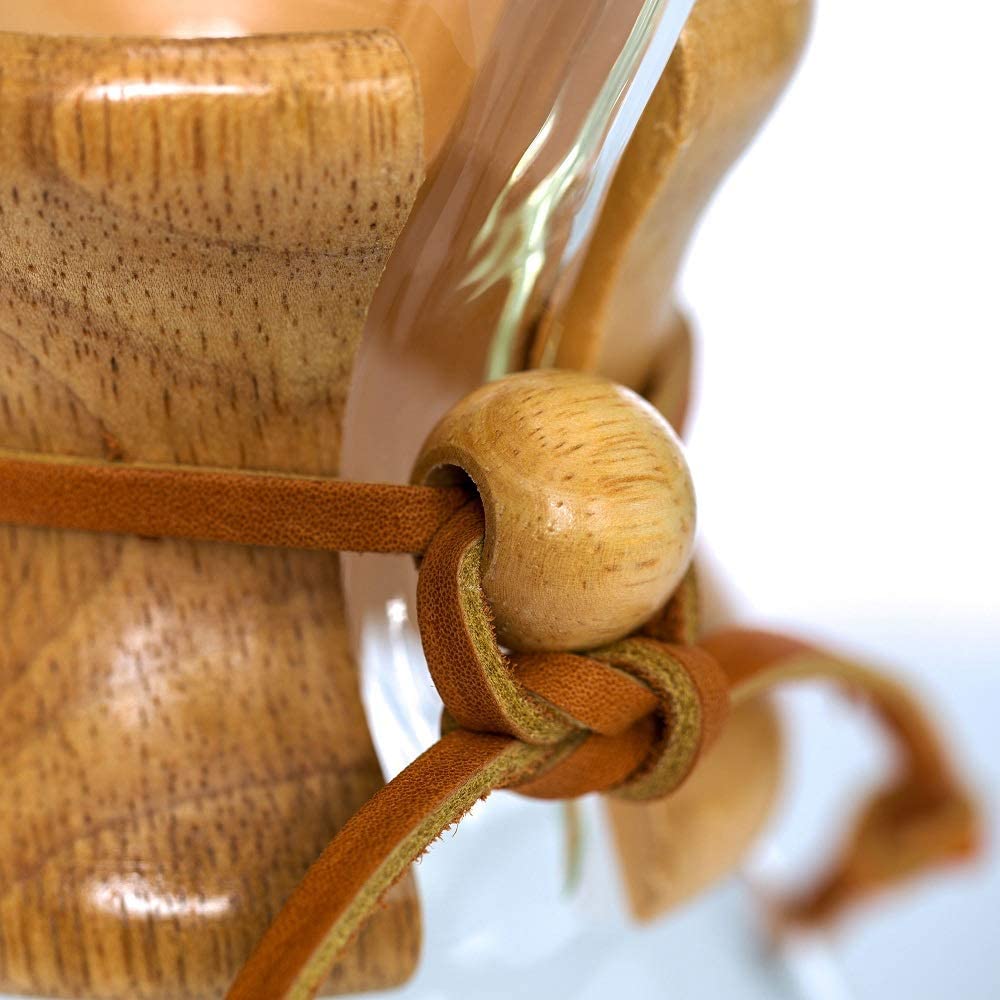
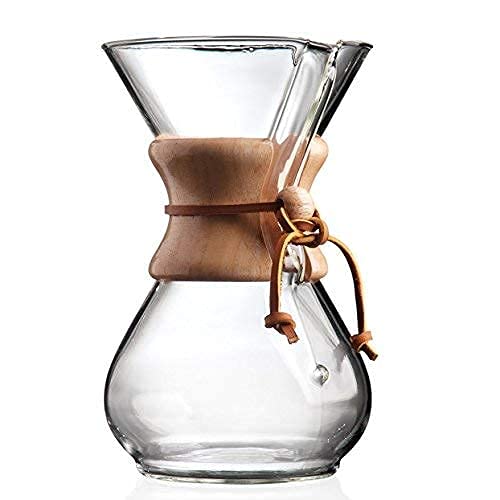
It’s an hourglass-shaped glass brewer that allows the brewer to see the entire process. The original design has a wooden handle in the center, while the Glass Handle design, which is more modern, has a glass handle instead.

The wooden handle comes in a range of colors. Both variants have a cowhide thong attached to the handle.

The Chemex is so beautiful and trendy that it was featured in New York City’s Museum of Modern Art. The Chemex deserves to be a part of the rich history of art and coffee.

Light can travel through the Chemex since it is composed of borosilicate glass. It can endure high temperatures and is easy to clean.

The combination of the wooden or glass handle makes it visually beautiful on its own, but much more so while brewing coffee. It’s both a work of art and a coffee maker.

Brewing Hot and Cold

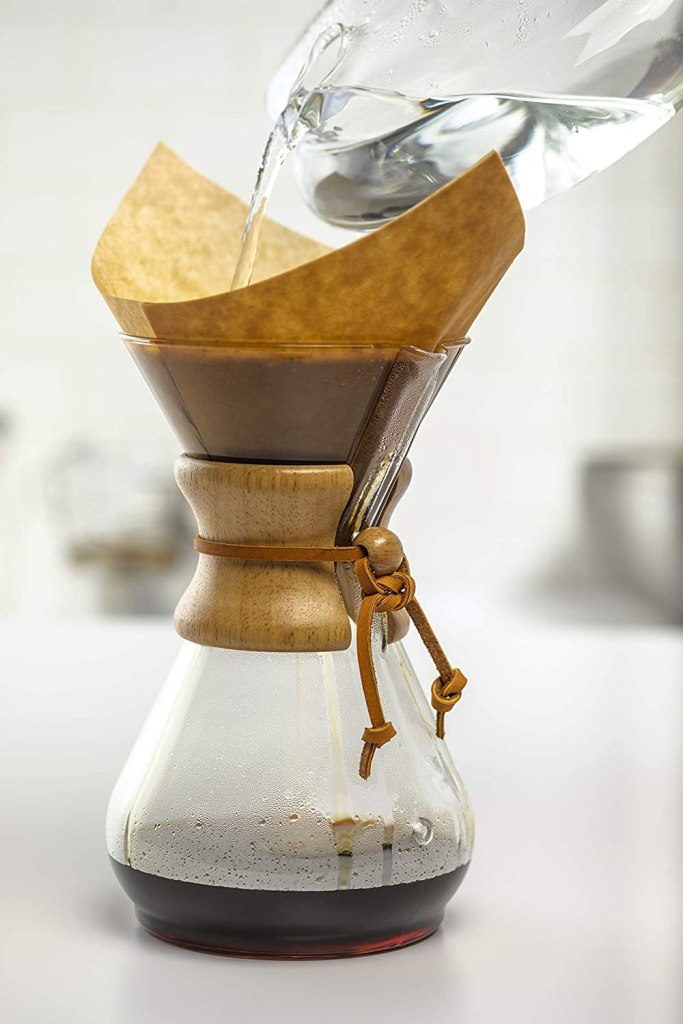
The process of brewing with a Chemex is both simple and difficult. The Chemex is categorized as a pour over. A brewing apparatus that pours hot water over ground coffee, which is then filtered in some way and collected at the bottom.

Then the coffee is ready to drink. 

The majority of this equipment requires no energy at all. They are portable and easy for brewing coffee anywhere, but they cannot keep it warm.

The majority of coffee experts consume their coffee in a few of minutes. And certain brewers, such as the Chemex, are built for this sort of quick consumption.

But how does brewing with a Chemex actually work? You’ll need a few materials, as well as your favorite coffee beans, to brew using it:

  • A weighing scale for precisely calculating the coffee-to-water ratio.
  • A grinder, which is used to ground the coffee beans just before brewing.
  • A kettle, particularly one with a gooseneck, to perfectly orient the pouring of hot water over the coffee Chemex’s bonded filter, which is specially created for this coffee maker.
  • A thermometer may be useful if you want to know the precise temperature of the water and recreate the resultant coffee the following time.

Brewing with a Chemex allows for last-minute alterations throughout the brewing process, making it especially versatile. There are various methods for brewing the ideal cup of coffee using a Chemex.

We won’t go over them all since doing so would require entire volumes. Instead, as a beginning point for investigating the brewer’s different capabilities, a basic approach to brewing with the Chemex is preferable:

  • Insert the paper filter into the Chemex.
  • Warm water should be used to wet the filter. Remove the water.
  • Fill the filter with the necessary amount of ground coffee.
  • Shake the Chemex a little to smooth out the grinds.
  • Pour the water in concentric rings, beginning in the center and going outward, then allow the coffee to bloom: a word referring to the release of carbon dioxide gas from the coffee when it comes into touch with hot water.
  • The amount of water used for the bloom should be around double that of the coffee.
  • After the bloom has faded, continue to pour the water in little amounts.
  • Allow the brewed coffee to thoroughly flow into the bottom of the Chemex after the pouring has finished.
  • Pour it into your cup and enjoy it.

We said that the Chemex is multipurpose, and it also serves as a cold brew coffee brewer. The brewing procedure is identical to the one described above, however it is more simpler:

  • Measure about 50g of ground coffee (for a 1:10 coffee to water ratio). Adjust the amount of coffee according to your favorite ratio and the size of the Chemex you have
  • Put the coffee on the bottom of the Chemex. No filters
  • Add the room temperature water. Stir the mixture
  • Cover the top of the Chemex to avoid anything entering it during the cold brewing
  • Let the coffee steep for anywhere from 12 to 24 hours, possibly in the fridge
  • Once the extraction time is finished, use a paper filter over a large jar or bottle and pour the cold brew coffee from the Chemex in it
  • It may need a while for the coffee to fully pass through the filter. Use a teaspoon to help moving the grounds and let the coffee pass quicker
  • Store in the fridge or immediately serve

As you can see, the Chemex is an excellent hot and cold brewer. Light and medium roasted coffee beans benefit from the technology and quality of the bonded paper filters.

This produces beers that are extremely bright, clear, and crisp while preserving all of the original characteristics of these roast variations.

It also works well with darker roasts, however the resulting coffee is lighter and uninspiring. That is not always the intention of black roasted beans.

CHEMEX Pour-Over Glass Coffeemaker

Pros and Cons

This brings us to the Chemex’s benefits and drawbacks. The appealing tool’s main benefits are the good quality of coffee it produces and its appearance. Another benefit is the ease with which it can be carried anywhere, as well as its low cost when compared to other brewing systems of equivalent output quality.

It does not require any electricity to function. It is small enough to fit anyplace and simple enough to use for anybody. You have complete control over the extraction process by adjusting the grind size, water temperature, and pouring technique.

Speed and movements.

There are, however, a few negatives to consider. Glass is gorgeous, yet it may easily shatter if dropped.

The Chemex may last a lifetime, but it must be handled carefully.

It is not a device for people who want to brew a large amount of coffee and drink it over a few hours since it cannot keep coffee warm at all. It makes use of proprietary filters, limiting your options in this respect.

As previously stated, the Chemex prefers bright, light-bodied, and low-intensity coffee. Fans of powerful espressos or french presses may find the coffee “weak” or “unflavorful.”

It is essentially a brewing procedure that emphasizes some properties of coffee beans over others. You won’t get dark roasts, coffee with a lovely froth on top, or very strong coffee with a Chemex.

Who is the Chemex for?

While it is simple to make a cup of coffee with the Chemex, preparing a perfect cup requires time and practice. The Chemex’s large aperture, reliance on the correct coffee-to-water ratio, and how you pour the water make it a harsh machine.

A little too much water or the improper temperature might be the difference between a good cup of coffee and a poor cup of coffee.

The right grind size is significantly more important for a Chemex than for other operations. Keep a coffee notebook and record all the specifics of your brews to find out what went wrong with a certain coffee.

If you’re not willing to spend time experimenting with coffee and pouring procedures, don’t get a Chemex. This fourth attribute might also be considered as a plus, as learning about coffee can be quite interesting and pleasurable.

It’s up to you to decide if you want “quick and easy” brews or prefer to fail and learn from your errors in order to make a better cup the next time.

The Chemex is without a doubt a wonderful alternative for those who love light roasts, acidic, and bright cups of coffee. This brewer is intended for anyone interested in learning more about coffee.

How to fine-tune the brewing process to produce the greatest possible result for their preferences and tastes. For those who wish to think about it before drinking a beer.

The Chemex is both art and a coffee ritual in one, and people who respect both should consider purchasing one.

Individuals who want their coffee exactly the way they like it every time, without having to fiddle with settings or learn anything new, will struggle with a Chemex.

Only if you research and document your experiments will you have a terrific learning experience with reproducible findings. If you lack motivation, the Chemex may end up in the kitchen drawer sooner than you think.

Design a site like this with WordPress.com
Get started